Industrial Dust Suppression Solutions
Effective control for mines, quarries, plants & stockpiles. Clean, cool and compliant operations with high-pressure misting systems engineered for South Africa and Africa.
Overview
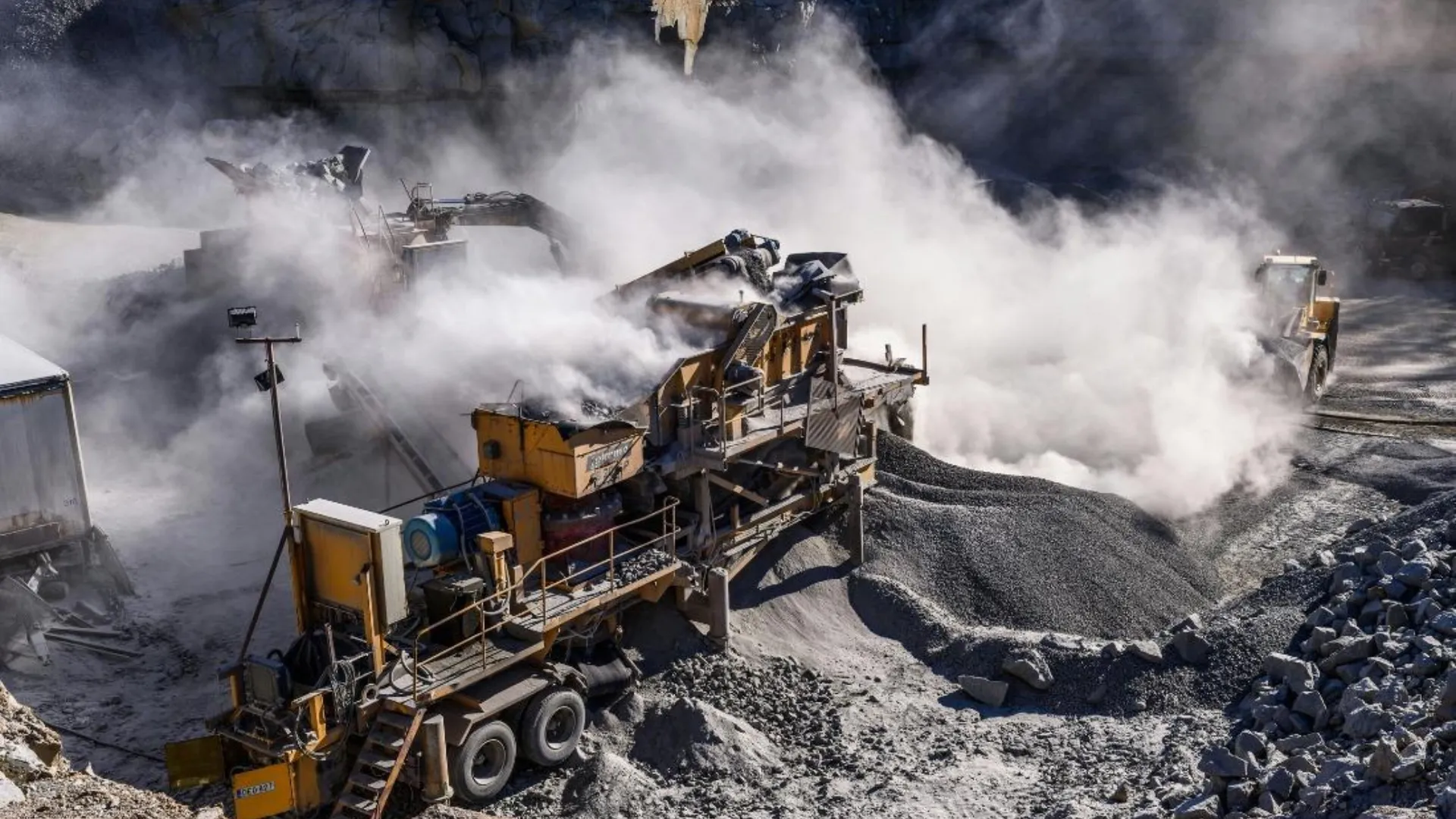
What is fugitive dust?
Fugitive dust refers to tiny airborne particles (PM10 and smaller) released during mining, material handling, production, and vehicle movement. These particles originate from stockpiles, crushers and screens, transfer points, haul roads, ROM pads, conveyors, rail and truck loading, and waste handling.
PM10 dust is extremely hazardous. At 10 microns (1/7th of a human hair), it stays airborne for long periods and can include silica, soot, metal fragments, ash, tyre particles, soil fines and industrial residues.
Uncontrolled fugitive dust leads to:
- Respiratory disease
- Long-term lung damage
- Cancer risk
- Reduced visibility & accidents
- Dust explosions (in dry plants / mills)
- Product contamination
- Community impact & legal pressure
- Equipment damage
Why dust suppression matters
Health & safety compliance
Modern regulations require facilities to actively reduce airborne particulates. Occupational exposure to PM10 and silica dust is being strictly enforced in mining, processing, construction, bulk materials handling and agriculture.
Heat-stress reduction
Outdoor workers benefit from reduced ambient temperatures when mist is applied correctly.
Fire & explosion prevention
Fine dust accumulation is a known ignition hazard in grain mills, sugar mills, textiles, sawmills, paper plants and coal plants.
Environmental & community compliance
Proper suppression keeps your site clean and reduces community complaints.
High-pressure vs low-pressure systems
High-Pressure Misting is the clear choice for industrial dust suppression.
All Misting SA dust suppression systems operate at 50–100 bar — engineered for compliance, efficiency, and long service life.
Theory & application of dust suppression
Why droplet size determines dust control efficiency
Research shows that dust suppression is only effective when the mist droplet is approximately the same size as the dust particle it aims to capture.
When droplets are too large — NO suppression
Big droplets push air aside; dust particles move around the droplet; no collision = no dust capture. Wasted water, wasted energy, mud creation on ground surfaces.
When droplets are correctly sized — EFFECTIVE suppression
High-pressure fog = 5–15 microns. Matches PM10 and PM2.5 sizes. Droplets stay suspended longer; particles collide, bind, become heavy; dust falls before spreading. Maximum suppression efficiency.
Theory of Dust Suppression
Why droplet size determines whether dust is captured
Research shows that a mist droplet must be approximately the same size as the dust particle to achieve collision and capture.
Airstream deflects dust particle
No collision — dust stays airborne
Collision — dust particle captured
Particles bind, become heavy, fall to ground
Misting SA systems produce droplets of 5–15 microns — matching PM10 & PM2.5 dust particle sizes for maximum suppression efficiency.
How our system works
High-pressure pumps (50–80 bar) force water through micro-nozzles to create a fine fog. This fog binds airborne dust at the source: stockpile faces, crusher discharge, screens, conveyor transfer points, vehicle off-loading bays, road crossings, rail load-out and processing sheds.
System components
- High-pressure pump station
- Misting rings / manifolds
- Fog curtains
- Solenoid / zone control
- Dosing (surfactant) systems
- Anti-drip stainless nozzles
- Automated start-stop control
- Cyclone / wind compensation (optional)
Dust suppression technology
Misting SA uses overhead misting lines, industrial misting fans, fog curtains, dust blasters, dosing tanks, chemical surfactants, custom high-pressure pump systems, and specialised control panels.
Lower maintenance, larger area coverage, better particle collision.
Typical applications
- Dust curtains
- Stockpile control
- Conveyor / transfer point control
- Processing plants
- Dust blasters & fog cannons
System design factors
We design each system according to:
- Particle size distribution
- Wind direction
- Conveyor speed
- Fall height
- Moisture absorption
- Material reactivity
- Environmental conditions
- Equipment sensitivity
- Worker zones
- Droplet size & nozzle selection
Get a Quote
Complete dust suppression systems across South Africa, Zimbabwe, Zambia, Namibia, Botswana, DRC and Mozambique.
Explore our solutions
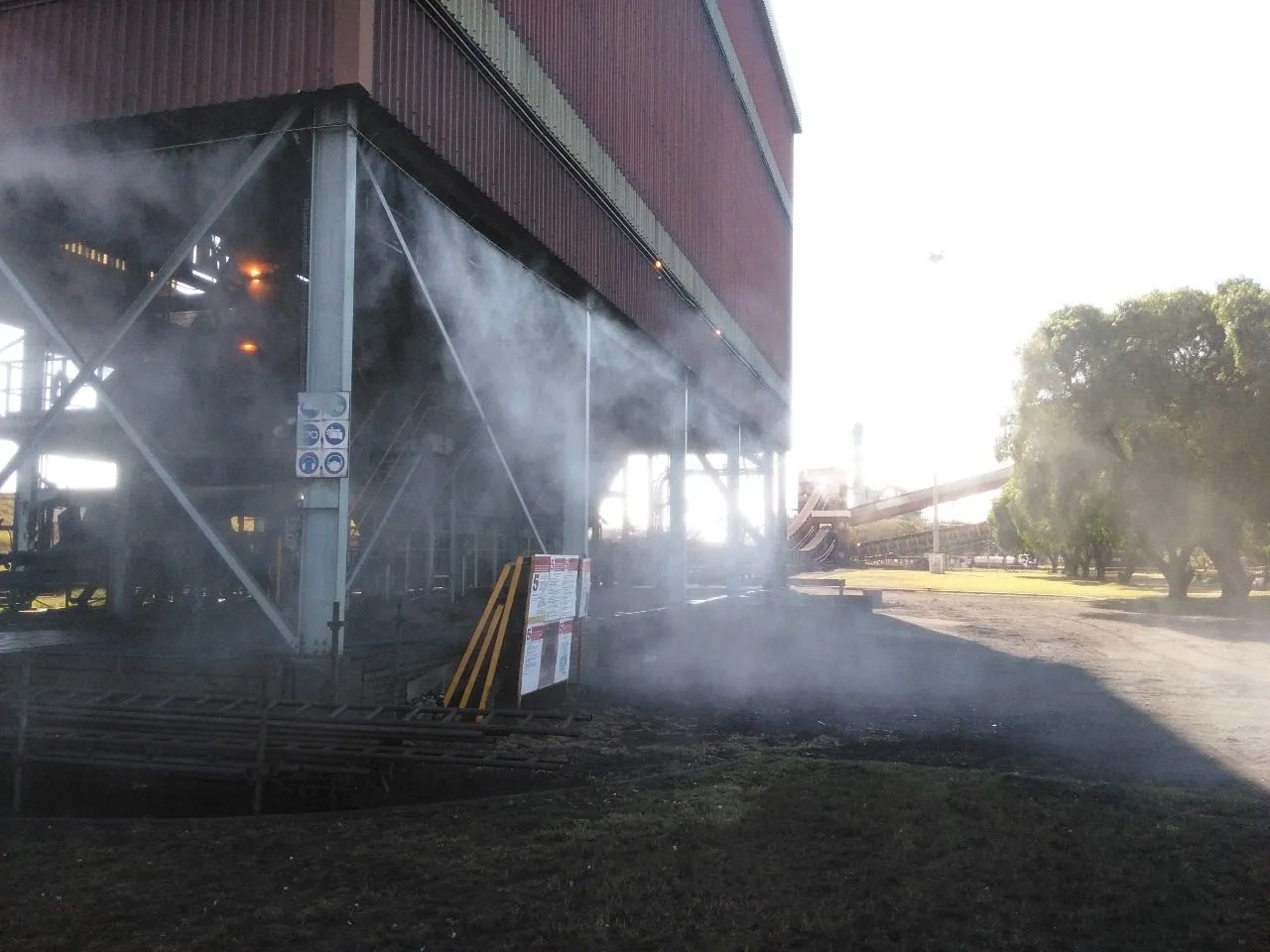
Fog Curtains
Perimeter barriers that contain airborne dust at open transfer points and haul roads.
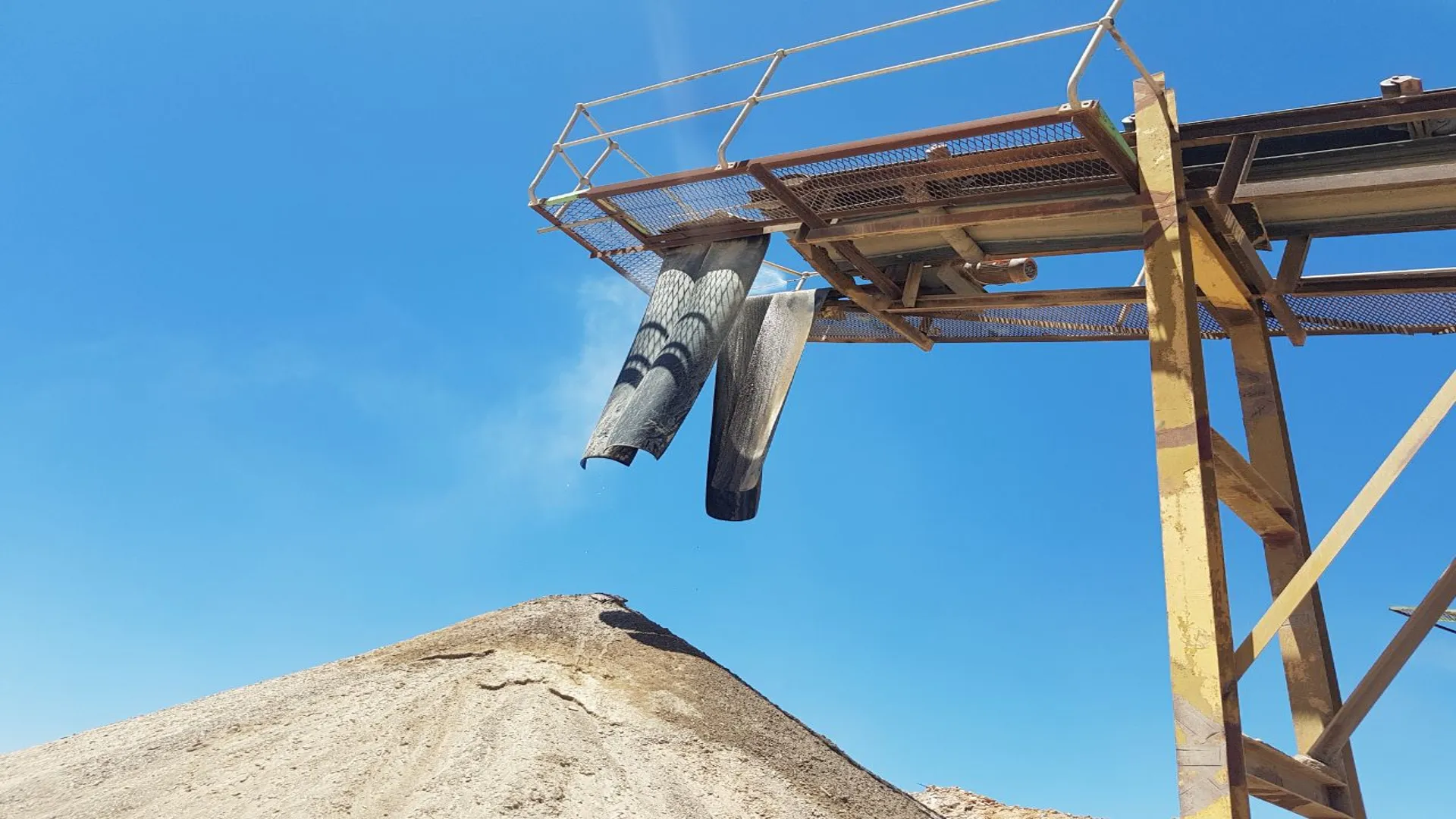
Stockpile Control
Suppress dust at the source on coal, ore, grain and aggregate stockpiles.
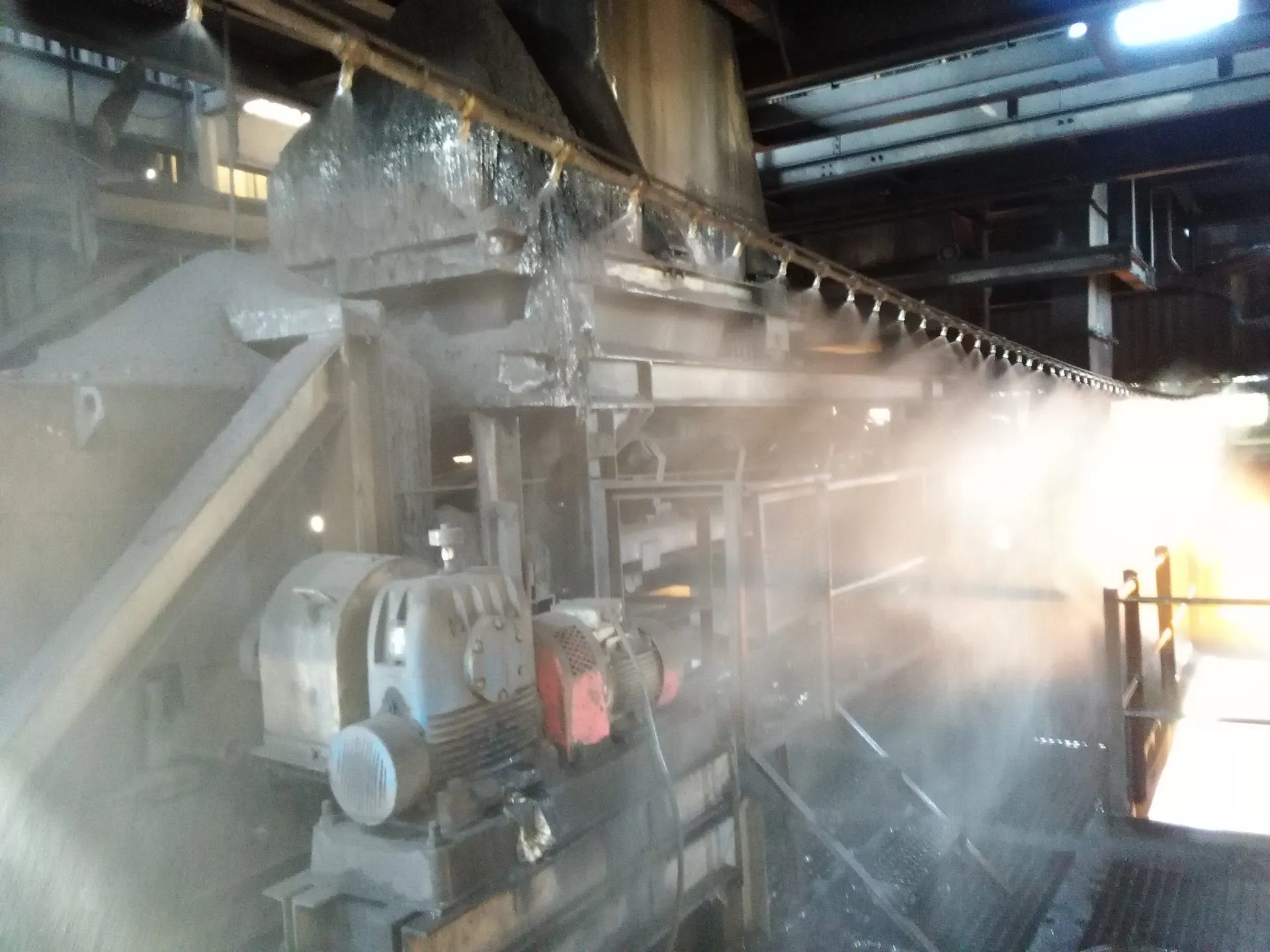
Conveyor & Transfer Points
Precision misting at every crusher, screen and transfer point along the conveyor.
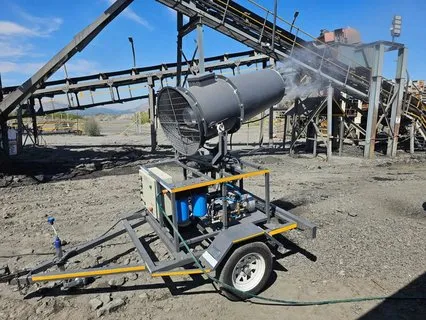
Processing Plants
Dust control integrated into crushing, screening, sorting and processing environments.
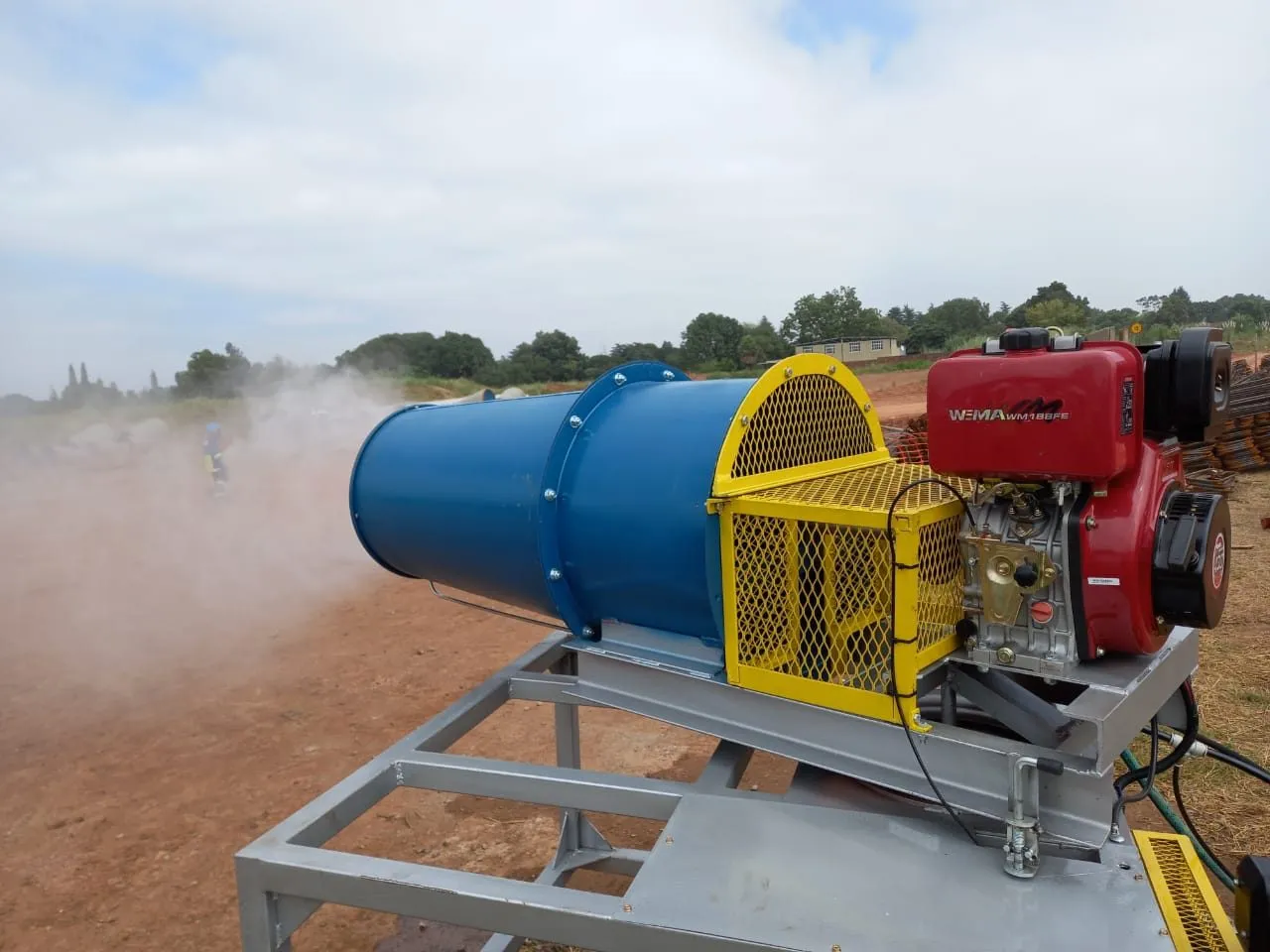
Dust Blaster Range
Mobile fog cannons with up to 110 m throw — built for large open-air areas.